



by Jaqueline Shima
Talent Acquisiton Cesla
The cultural and technological changes currently experienced allow us to take a more careful look at our working hours, in the search for balance between personal and professional demands. The pandemic and the changes in routines have directly impacted this context, bringing possibilities and methods of flexibility that were unthought of and even previously seen as "impossible".
The Human Resources area had to reinvent itself in the face of these challenges, leaving an operational scope and moving towards more strategic paths. The look that was already focused on people, needed to find an increasingly humanized and empathetic management to understand the individuality of each employee.
Actions and cultures
In parallel to these changes, Cesla has been designing actions and cultures to develop an affective and comfortable work environment for its employees: from continuous feedbacks, light chats in the 'Coffee with the team', spaces where the employee is open to speak confident that he or she will be heard without prejudices and judgments.
We created a decision-making committee with OKR management (methodology for defining objectives and results), where 64% are composed of amazing and powerful women. Every month "Enchantment Actions" are held, whose objective is to bring closer and diversify the day to day of the collaborator, getting out of the routine and bringing a more natural, relaxed environment and uniting the teams. In the last few months we had actions such as a Games Championship, SPA Day with workplace exercises, lectures on mental and emotional health, Children's Day...
New processes are designed together, always focused on the experience and belonging for everyone. Since then, we have achieved great results through an innovative vision and opportunities, based on diversity, which is one of the most important factors for Cesla.
Technology and Innovation
With all the transformations, the world is not and will not be the same again. We need to reinvent ourselves, innovate, update, and build more digital and integrated models, allowing exchanges and openings. Understanding that we are different and that each one has its own particularity is fundamental to build an environment of psychological safety, humanized and essential for everyone's health.
The use of technology has become a fundamental tool and a great ally, giving more autonomy and freedom to employees to perform their tasks in the hybrid system, besides bringing people together and connecting organizations in building new areas and partnerships. This has had a positive impact on deliveries, establishing a relationship of trust, totally contrary to a controlling vision. In this way, values that are intertwined bring an effective gain in the achievement of results and consequently, in more satisfied, active, and engaged employees. Let's take good care of them!
And faced with this, the work of HR and Cesla is transformed daily, reinventing and updating itself with a market focused on drawing plans to achieve competitive advantages. And more than that: the HR professional becomes a transforming agent in managing people from the entire network involved in the organization, making the company's culture clearer and awakening a sense of purpose in its employees, wherever they are.
After all, what is Lean Inception?by Fernanda Menezes de Souza
Project Manager Cesla
Everything we live in today is fast-paced. Moments quickly become memories, the day goes by in the blink of an eye, and so do the challenges of everyday life. Information, news, and updates occur and expire without us being able to catch them and nourish ourselves. A flood of fast-moving information that permeates our lives, everything architected and structured to be this way. With this, the way we think and develop solutions also needed to go through renovations and the creation of new techniques. Today, solutions are found and developed in such an agile and natural way that when we realize, we can no longer live without them. And what does speed and this "information overload" have to do with Lean Inception? Everything. The word lean means "lean" and its philosophy fits the agile methodologies, which is the opposite of "information overload". Based on segmentation, that is, starting from small actions, it is possible to work with a large amount of information in a fast, effective and compartmentalized way. Thus, Lean Inception brings together complex problems, short delivery time and high value, from a framework that enables learning, building and measuring in a cyclical way.
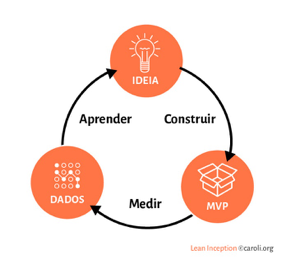
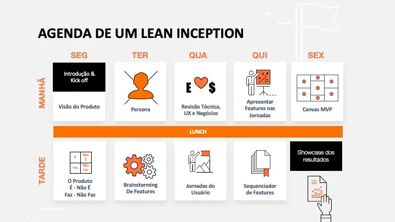
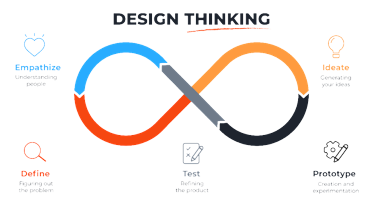
You might be thinking, "Ok, deliver fast and deliver a lot, but what in fact is Lean Inception and how does it happen?". Well, Lean Inception is a five-day workshop that mixes agile with Design Thinking methodologies, where we try to understand everything about the problem to find the best solution and structure how to develop great value in a short time and, bonus: consistently!
To be clearer, let's think about some cases: Case 1: You've probably used iFood, maybe you use iFood a LOT (I won't judge you), but do you remember, maybe in mid-2017 or 2018, when there was no "iFood Marketplace"? You could be in your house, starving, not having anything to eat, so you would think "I'll order an iFood". Ok, fine... but what if you wanted to prepare something, or just needed some Parmesan cheese that you forgot to buy when you went to the supermarket, and unfortunately there is no way to buy it without going back there. Soon the whole experience of a super macaroni was ruined. Now you have the Ifood Mercado for such situations. Case 2: Imagine... you are in dire need of a college book that you have left at your parents' house, which is not far away, at most 20 minutes from you, but no one can bring it and you are stuck at work, with no way to pick it up. Who will help you? Yes, that's who, Uber Delivery. In both cases we see examples of companies that launched their products in a functional way and improved them little by little, adding new features as the products developed. Now think of another scenario, much simpler this time: one product and two different methodologies. For both methodologies we have a deadline of one year to finish the project. In the first, I make one delivery per month, perform usability tests, and make sure I am developing what my client asked me to. In the second, I spend the first eight months developing, use two months for testing and the last two for correction.
Which of these methodologies do you think will be more successful? I bet on the first one, because it allows me to adapt, correct, and develop solutions that actually meet the problem we seek to solve. This is the proposal of Lean Inception. With Lean Inception we plan and develop small deliverables in a constant way and with high value to the client, thus ensuring that we are on the right track and, if not, we can fix it quickly.
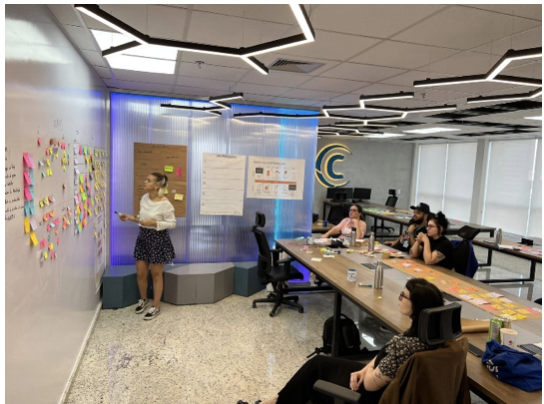
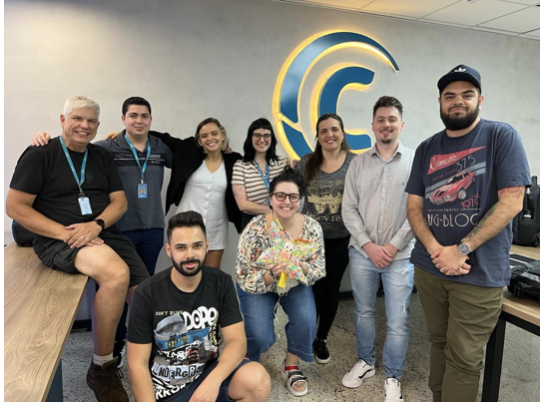
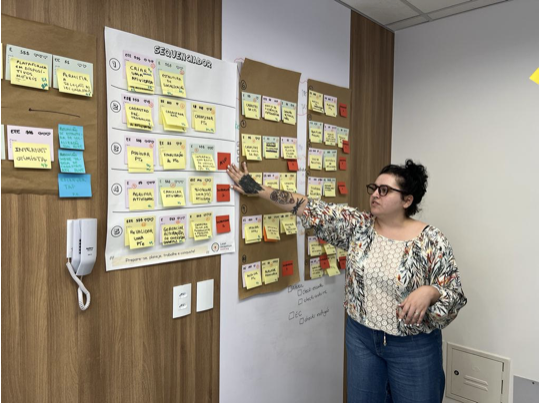
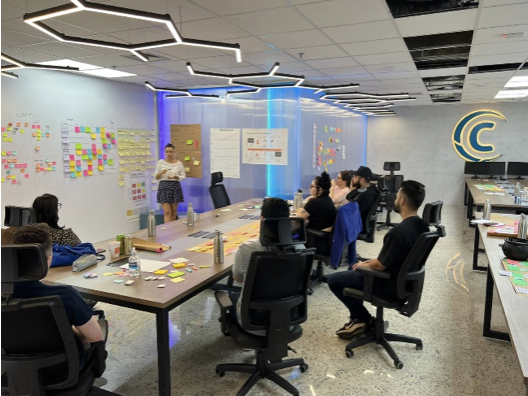
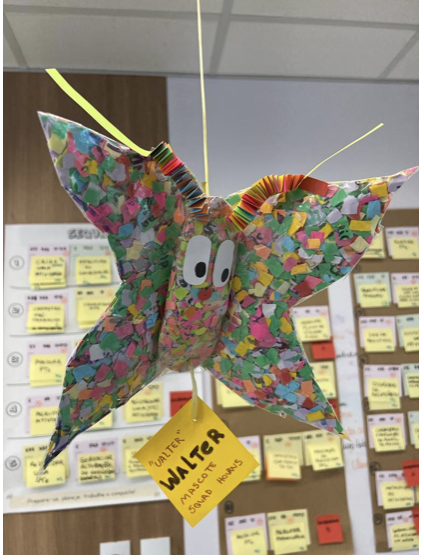
Here at Cesla we have proudly adopted this workshop to develop our products. Currently, we have two projects that started from Lean Inception, the Hive that will replace our beloved EPS Management, and the Horus that will be the new APR/PTe. The latter, I had the opportunity to teach the whole workshop, and I can say with confidence that after a week immersed in the product development, the whole team left the company with clarity of the product, excited about the MVP challenge, and with an incredible synergy. Figure 4: personal file.
To conclude, I add here a phrase that drives me and elucidates well the proposed idea: "fall in love with the problem and not the solution", because, in this way, we can improve ourselves in developing the best product in the most flexible, technological and assertive way, this is the focus of Lean Inception. Think about this sentence and never give up on complex problems, because usually all that is needed is a little simplicity and a constant learning process.
The industrial areas present hazards arising from the employment and subjection of the employee to various energy-generating sources. Therefore, the ministry of labor regulates and supervises so that industries comply with regulations to avoid accidents, such as the dangerous energy control program, the lockout and tagout.
What is lockout and tagout?
Lockout in English means lockout and tagout can be translated as label, so we can say that lockout and tagout is lockout
and labeling of hazardous energy generating sources.
The NR 12 establishes parameters, protection rules, safety standards, and basic premises to prevent accidents. It also regulates the lockout and tagout program to control dangerous energies such as: electrical, hydraulic/pneumatic, kinetic mechanical, gravitational, among others.
Lockouts are normally done through labels, seals, and padlocks, but new technologies have brought new possibilities such as the Loto module of the Cesla system that allows for more security, compliance, and digitalization of the Lockout and Tagout program.
Lockout and tagout and the new technologies
New technologies such as machine learning and the internet of things are everywhere creating disruptive scenarios, and the industry is also going through this digital transformation process. In this scenario, the Cesla system has developed the LOTO module, a solution to transform the lockout and tagout procedure through technologies and solid knowledge acquired in the field by risk engineering teams.
What is Cesla's LOTO module?
LOTO is a management system focused on hazardous energy control connected with electronic work permits, allowing the user to model the LOTO map/tree, associating that task, the blocking and inoperability test points observing their location hierarchy.
Our system allows you to control any source of dangerous energy, managing who applied the block and when it was done, using direct reading technology with the use of RFID via NFC from the mobile device attached directly to the point that is associated with a map/tree of LOTO.
Enables lockout and inoperability tests observing the logical sequence created for locking and testing, thus preventing erroneous lockouts or inadequate tests and increasing the safety of the workers and processes involved.
LOTO features a dashboard and allows interaction with augmented reality, providing excellent management at a glance.
Want to know more? Talk to our consultants!
Did you like it? Share this content.
How to do e-learning integration?How to do integration via E-Learning? How to digitalize the integration process in the industry? Many professionals in the safety and management area have asked this question and that is why we prepared this content to clarify some doubts.
What is enterprise integration?
The corporate integration aims to insert the new direct employee or service provider, drivers, and visitors in the company's organizational culture, presenting the brand philosophy, the company's presence in the local or global market. Themes involving rights and duties, dangers and risks existing in the work environment, 5S, quality, and environment cultures are common in these integrations, which aim to involve the workers in the sense of welcoming and engaging them in the "owner's attitude" culture.
This process is primordial within the industry, involves several areas and sectors, goes through several steps, and is usually time-consuming and applied in a face-to-face manner. Nowadays, the integration process can be more productive and totally paperless with technology as an ally.
What are the steps in conventional integration?
- When service providers, the company does all the validation of company and employee documents required to perform the contracted activity;
- Schedules on a previously established date and time the face-to-face integration in the unit where the activity will be executed;
- The employees travel to the unit and attend face-to-face integration;
- New employees and visitors sign in-room attendance lists:
- Ingression to work.
Disadvantages of conventional integration
Although it is very common in traditional companies, conventional integration has flaws and problems, these being:
- Slowness in sending and validating documents;
- Loss of operational time to attend face-to-face integration;
- Prints and keeps supporting papers;
- Possible fraud by employees;
- Crowding in training rooms.
Integration E-Learning as a solution
Facing the possible errors and problems found in conventional integration, as well as seeking to avoid agglomerations, Cesla developed the INTEGRA module for E-Learning integrations, which allows linking an integration content with content evaluations and reactions, besides managing the application digitally and managing the trainees.
How Integration Works E-Learning?
E-Learning integration solves some weaknesses of conventional integration, and works as follows:
- The employee or visitor logs into the tool;
- Employees and/or visitors can watch remote integrations, wherever and whenever they want on their mobile device or any computer;
- At the end of the integration, the employees and/or visitors must perform a content evaluation with questions extracted from the applied content.
- System generates QRCode for participants who pass the evaluation.
- The system indicates the path (route) for the employee to travel to the company if the service is provided in person.
- It will not allow a service provider to enter an electronic work permit if the integration is not valid.
Integration Benefits E-Learning:
- Online document validation;
- Direct integration with the contractor permissions module (EPS Management);
- Direct integration with the electronic work permit module (APR-PTe);
- Association of integration videos for visitors, drivers, employees, and service providers;
- allows you to model content and reaction evaluations by type of integration applied;
- Elimination of crowding in the room;
- Totally paperless management;
- Indicates to the integrated the route how to get to the company.
How the integration E-Learning integration contribute in DDS?
In addition to the benefits cited, the E-Learning integration contributes to the Daily Safety Dialogue (DDS), becoming an allied tool for the work safety team. Understand how it benefits the safety team:
- Allows you to model a safety and reaction dialog content per type of integration applied;
- Allows you to collect signatures directly on the mobile screen from integrations performed in the field, even when offline;
- Allows to highlight the integration with photos at the moment of execution;
- Allows you to generate an attendance file with collected signatures;
To learn more about Cesla's INTEGRA module and technologies for industry, please contact us.
Impacts of Industry 4.0 on society.Industry 4.0 has emerged to transform people's lives, as it has generated great economic growth that has given people the opportunity to secure their jobs and improve their quality of life.
This concept can change business and personal relationships in a globalized world. That is why it is an important theme to be debated, since it is already part of our society's reality.
THE FUTURE OF INDUSTRIES
The production processes demand more and more agility and optimization from the teams, and that is why digitalization has come strongly to the demands of industries.
The perspective is that technology and innovation reach the factory floor quickly and urgently. Those who have not yet adapted to the new reality are losing productivity and money.
The transformation process is being accelerated because of the competitiveness among manufacturers. Technologies such as the Internet of Things, robotics, and artificial intelligence are just some of the things that are driving the industry to its greatest potential.
Some of the principles of Industry 4.0 are performing tasks and collecting data in real time, tracking and monitoring processes remotely, flexibility in performing certain functions, and communication between machines.
A great example of how technology has brought benefits to our daily lives is the impact of the pandemic on everyday activities. Many people started to work remotely, and this is only possible because of the connectivity and technology present in the processes. Everything is connected and the world has not stopped, even with many people at home.
THE IMPACTS ON SOCIETY
Unlike in the past, nowadays it is people who influence the industrial sector, and this causes industries to adapt to new market realities.
And this is why technology is more and more present every day in industrial processes. The way people consume has changed a lot in recent times. A great and important example are much more environmentally responsible consumers.
People care about consuming brands that are sustainable, and they go after this information. A cleaner production, without deforestation and with material reuse are extremely relevant points in the modern industry.
Another factor that reflects on society is the job market, which has as an effect new opportunities generated for new positions and specializations. Although in certain functions the machine is in place of the man, technology comes as an opportunity for the employee to be present in less manual and repetitive positions, and this depends on the opportunity of courses and training in the area.
THE IMPACTS ON BUSINESS
Technology is the great responsible for a competitive differential in the market. This new way of working in the industry brings advantages to the economy, with less social inequality and more economic stability for the population.
Therefore, the trend is that Industry 4.0 and its concepts will spread in a short time in several countries, thus giving rise to new businesses and new working methods.
Production is always going in the direction of considering the needs and desires of the consumer, delivering more personalized products, which generates greater customer loyalty.
5 tips to increase productivity in the industry!Productivity gain is one of the most sought after factors in the industry by managers. For this, several processes must be optimized, valuing quality in each of the work stages.
A productive and organized work environment makes room for the conception of new products, more innovation for the brand, and a competitive differential in the market. The employees feel more motivated, since the workplace is lighter and there is a possibility of growth.
Check out 5 tips on how to increase productivity in the industry:
1 - UPDATED PROCESSES
From time to time it is necessary to review production processes so that they are more optimized, simplified, and, when necessary, eliminated.
The collaboration of the most experienced employees in each sector is essential, due to the great knowledge and skills they have accumulated over time. Thus, they can provide feedback to managers, making this communication very accurate and collaborative.
2 - MOTIVATED AND WELL-TRAINED EMPLOYEES
Motivated employees are much more productive. Provide a professional environment where people feel more inspired to work, with incentives and a pleasant physical space.
Frequent training is also essential to keep them capable and with a better performance in their function. Providing training is not an expense, it is an investment to ensure employee safety and a more satisfactory work result. All this results in a much more productive team.
3 - UPDATED WORKFLOW
Managers need to closely follow the industry's workflow, which means paying attention to all processes, from the arrival of inputs, to the transportation of the product.
Thus it is possible to evaluate human and technological factors and the performance of all activities in order to identify possible problems that may interfere with the overall operation of the company.
4 - INVEST IN TECHNOLOGY
The larger the size of the company, the greater the need to rely on technological systems that bring more efficiency and productivity to the processes. Much has been said about new trends and technologies that can help companies with productivity, security, and competitiveness in the marketplace.
These are technologies such as artificial intelligence, the internet of things, facial recognition, QR Code reading, and much more. Check out more details about these technologies here.
5 - TECHNOLOGICAL SOFTWARE DEPLOYMENT
To ensure more productivity and safety in the industry, it is possible to implement technological software , customizable solutions that aim to ensure the best cost-benefit solution for each client.
A safety platform for Industry 4.0 focuses on high-risk management, paperless and user experience applied to mobile and versatile tools, which can even operate offline. With technological solutions, it is possible to have a more sustainable, productive and safe industry.
Check out here all Cesla's solutions to make your work environment more productive.
Overloaded team? Understand everything about management in Industry 4.0.The digital environment has caused many changes in society. Nowadays we are connected all the time by cell phone, and this technology has arrived in the industries as a way to facilitate all their processes and ensure more productivity for the teams.
INDUSTRY 4.0
Industry 4.0 encompasses a large system of technologies that are changing the format of production and the business model around the world. This concept has a very strong impact when it comes to industry productivity, as it significantly increases the efficiency of existing resources, and processes become increasingly secure.
Industry 4.0 makes use of technologies such as the Internet of Things, cloud data storage, artificial intelligence, etc. All this allows machines to be connected to each other, and information to be managed more easily.
They are intelligent factories that have the ability to run operations themselves, predict failures in some process, warn about necessary maintenance, among other various functions. As a result, there is a reduction in the industry's overall cost and in the possibility of errors in complex operations.
WHAT CHANGES IN MANAGEMENT IN INDUSTRY 4.0?
And it is not only on the factory floor that Industry 4.0 applies its technologies. Managers need to take a more digital look at all stages of the production process, from the administrative to the production line.
The daily management of the industry needs to have more autonomy and integration among the processes. It is necessary to have a critical eye and understand the workflow, which technologies can be added to the reality of each function.
Another very important point of Industry 4.0 is that many may think that people are losing their jobs to machines, but what happens is that employees can be reallocated to other more strategic functions of the production process. But for this, they need to be encouraged by management to take courses and training in order to become familiar with the technology.
Industry 4.0 needs qualified professionals who are attentive to the great novelties of the market. Management still needs to have an eye on the best way for teams to work as in the traditional way, but today they can count on the technology that Industry 4.0 offers, through data generation, automation, strategic management of labor, etc.
THE IMPORTANCE OF SOFTWARE
The daily routine in a factory is full of tasks to be carried out. Therefore, everything needs to be completely aligned so that no problems occur that will affect several production lines.
It then becomes important to implement management systems that will be indispensable for the manager, because the most modern software is able to interconnect the teams, making fewer failures occur and all teams are more productive.
These systems are also very important for the employees' safety, such as managing the use of PPE, the possibility to report an accident-generating situation quickly, confined space management, nonconformity management, control of people entering the industry, and much more.
This type of platform is always ahead, using all the available technologies in the market to provide industries with much more productivity and safety, which consequently results in financial gains and more motivated employees.
Adapt to the new market reality! Check out all of Cesla's solutions.
4 reasons to decrease paper consumption in industry.Do you have any idea how much paper an industry uses? Studies indicate that between 1% and 3% of a company's revenue goes toward printing costs. And this is not just restricted to the obvious expenses such as paper and printer cartridges, but the invisible costs as well, which include storage space issues and the organization's productivity.
THE WORLD SCENARIO OF PAPER CONSUMPTION
We consume millions of tons of paper around the world, so you can imagine that for this to be produced, a huge amount of pulp, water, and energy was used, as well as a lot of waste discarded after production.
The vegetation also suffers the consequences of paper production, which is deforested to make room for eucalyptus and pine plantations, which are the trees from which the pulp is extracted.
Thinking about the digital world in which we live today it is easier to think of reducing paper consumption, but there are many things that need to be printed in our daily lives such as product packaging, newspapers, magazines, among others.
With the covid-19 pandemic, the growth of paper production has increased even more in some sectors, as people have started to buy much more via e-commerce and also by delivery, which has increased the consumption of packaging and hygiene items.
EFFECTS OF THE PANDEMIC ON PAPER CONSUMPTION
With the large increase in companies working remotely and doing their activities digitally, the use of paper for these purposes has decreased, as people are able to maintain their activities entirely online, so there has been a decline in printing in companies.
And the trend is that this demand for printing paper will continue to fall, despite the resumption of classes and face-to-face work.
It will still take a long time for companies to transform their processes fully digital with no dependence on the use of paper, but the decrease will happen over time with small measures.
Those who have adopted the home office may realize that many times in the office they used to print unnecessary things, and that we can do practically everything digitally.
REASONS TO REDUCE PAPER USE IN YOUR COMPANY
1 - LESS COST
Printing costs are high in companies, ranging from the most obvious to the invisible costs as we talked about earlier.
Think of the amount of paper used for documents, contracts, reports, and notices that could easily be done digitally. In addition to the cost of maintenance of printing equipment, cartridges, and energy used.
2 - MORE ORGANIZATION
Brazil is at a low level regarding good management practices in companies, thus showing that its processes are still very disorganized, and this is totally related to paper.
Papers are lost very frequently, and this leads not only to disorganization, but also to loss of employee time looking for these documents, which can be very important and are not completely safe.
3 - THERE ARE MORE EFFICIENT FORMS OF STORAGE
Besides the physical space that physical documents take up, it is not at all practical and easily accessible to find them in a company.
Opting for the electronic version is a way to have a safer management, since there is no risk of losing the information due to physical issues, and also much more practical for these files, since it is much easier to find the information in digital through cloud storage.
4 - IT IS MUCH MORE SUSTAINABLE
We need to be increasingly concerned about the environment and the impact we cause. Reducing the use of paper in the company has a direct impact on the environment.
We are going through a very serious water crisis, and water consumption for paper production is very high, in addition to electric power, waste production, and deforestation.
Paper has a decomposition time of 6 months approximately, while cartridges and toners can take up to a thousand years, besides the risk of the ink leaking from the packaging and polluting the environment.
Stop to think how much a company can deforest every year? With other options available that are much more sustainable, there is no reason not to be more sustainable.
PRACTICAL TIPS TO REDUCE PAPER CONSUMPTION IN COMPANIES
Simple attitudes can make all the difference to reduce the use of paper in a company, and the first step is the awareness on the part of management and employees, it is necessary to think collectively. For this, create educational campaigns and have this culture very strong in the company, you can even work with goals and actions with rewards.
Try to print only what is necessary and prioritize all communication in digital form, use all the technology we have available to our advantage, with the use of digital documents and contracts, electronic signatures, and platforms for cloud storage.
Before disposing of the paper, try to reuse it in some way, either for drafts or even by sending it to companies that make crafts with recycled paper, for example.
A software is also essential to perform a paperless management in the industry and thus greatly increase your productivity, contact us and learn more!